
Water Testing
WATER TESTINGWater Testing
Kerman Zamin Chemical Industry Laboratory Complex
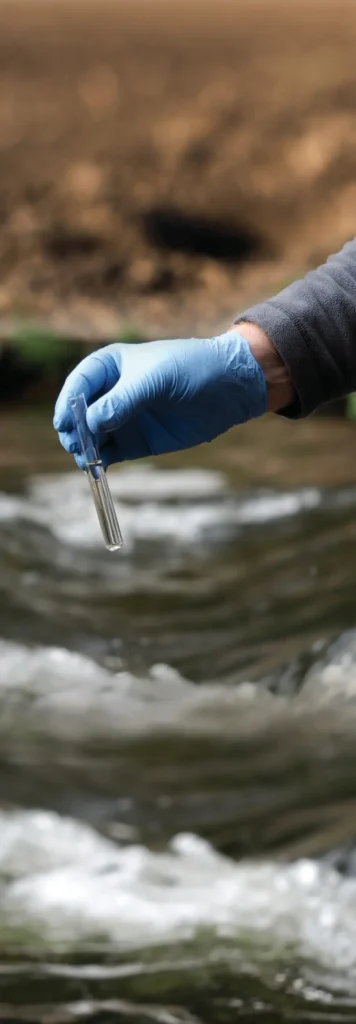
The agricultural sector accounts for approximately 92% of the country’s total water consumption, which is a remarkably high figure. Water quality plays a critical role in human health, and understanding its condition for various applications—such as drinking, irrigation, aquaculture, industrial use, and construction—is essential and unavoidable.
Repeated droughts in recent years have led to a reduction in freshwater resources, a decline in groundwater levels, and the drying of wells and qanats. Moreover, excessive extraction of water has resulted in increased salinity and hardness of freshwater supplies. When assessing water quality for various uses, measuring parameters such as acidity (pH), salinity, and dissolved minerals—including cations and anions—is essential and indispensable.
The Jonoobgan Laboratory Complex, equipped with advanced instruments and standardized methods, is fully capable of providing comprehensive water quality testing services for various applications.

Comprehensive Agricultural Water Testing Package
- The circle represents the measurement of that specific parameter in the water sample.
- The parameters marked with an asterisk are not included by default in the Comprehensive Agricultural Water Testing Package, but they can be measured upon request.
- The circle represents the measurement of that specific parameter in the water sample.
Comprehensive Drinking Water Testing Package

- Parameters marked with a circle are included by default in the package and will be measured.
Soil Sampling Method for Laboratory Testing
The importance of proper sampling is as significant as accuracy in analysis. Therefore, the following points should be carefully observed during the sampling process:
1- For sampling orchards, soil samples should be collected from beneath the tree canopy, in a flat water-accumulating area, approximately 1 to 1.5 meters away from the tree collar.
2- Soil sampling should not be conducted in drainage areas, uneven parts of the plots, or locations containing fertilizer layers from the previous year.
3- The sampling surface must be free of any contamination.
4- For sampling from fallow land, the sampling area should be irrigated twice, with a 7-day interval between irrigations.
5- For orchard soil sampling, the sample should be collected from the walls of the pit at different depths.
6- The minimum acceptable weight for each soil sample is one kilogram. Each sample must be labeled with a card containing complete information, including the date, owner’s name, region, orchard and plot name, pit number, and sampling depth.
7- If the field (orchard or farm) appears uniform, to obtain a more accurate sample, dig multiple profiles across the area and mix soil from similar depths together.
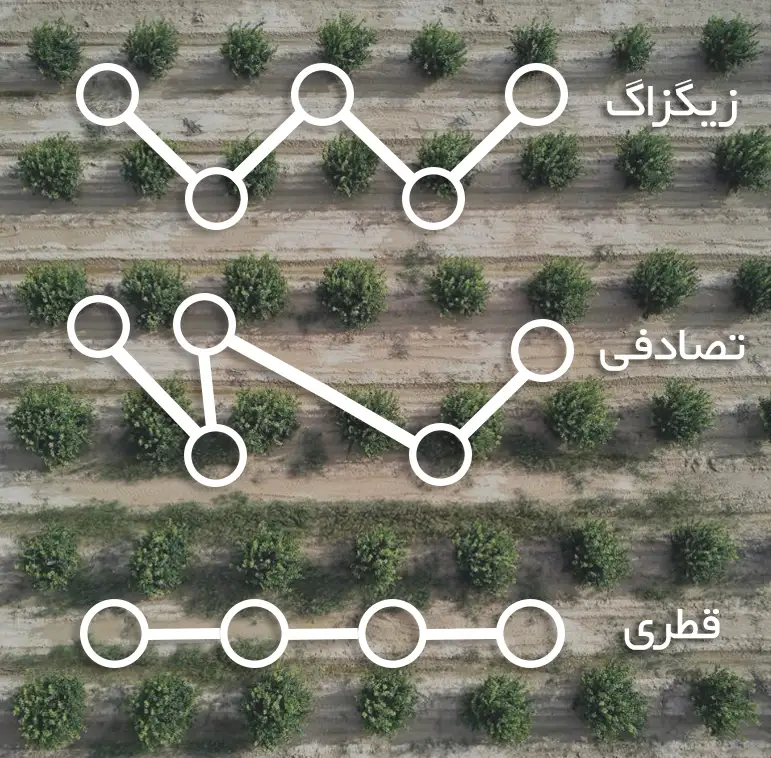
8- Sampling should be conducted randomly, in a zigzag pattern, or along a diagonal.
Soil Sampling Method for Orchard Testing
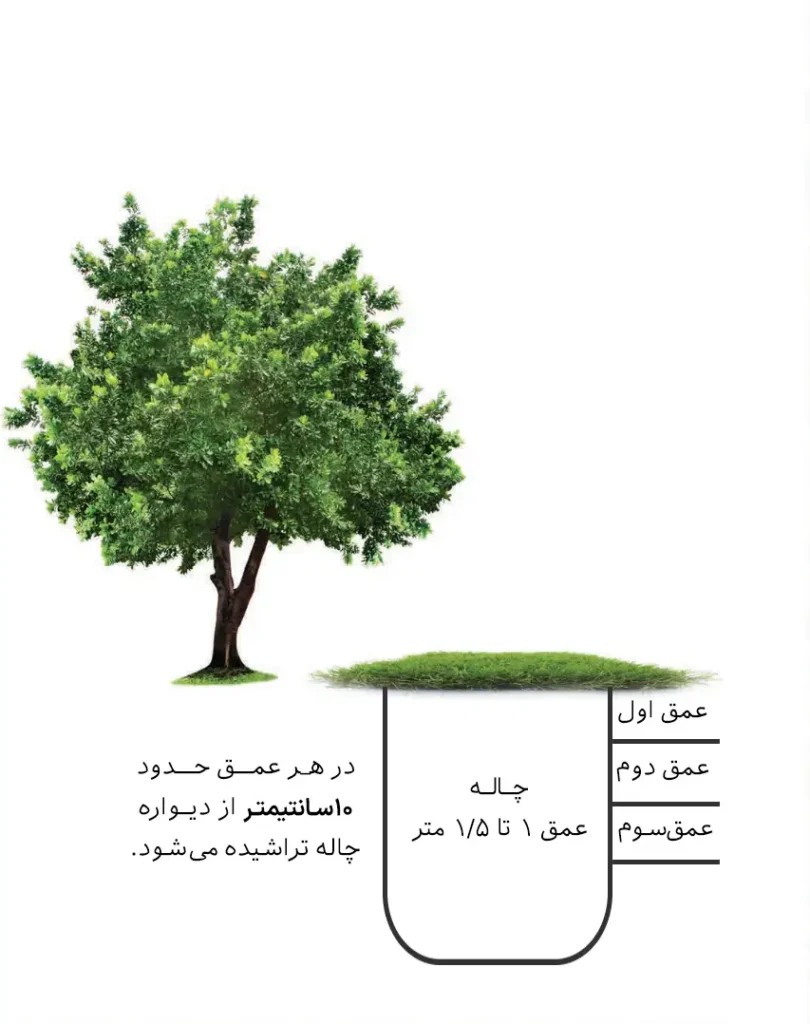
Dig a pit under the tree canopy in an area where no fertilization has been applied, to a depth of 1 to 1.5 meters.
Soil Sampling Method for Field and Greenhouse Testing
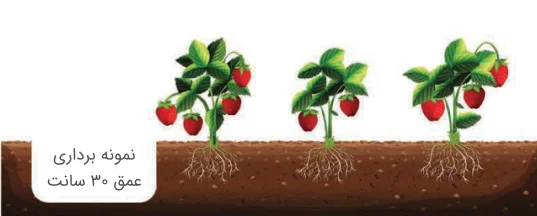

No pit excavation is required; remove the top 5 cm of soil and collect the sample down to a depth of 30 cm.
If you have any questions, our laboratory staff are ready to assist you
Contact Us